
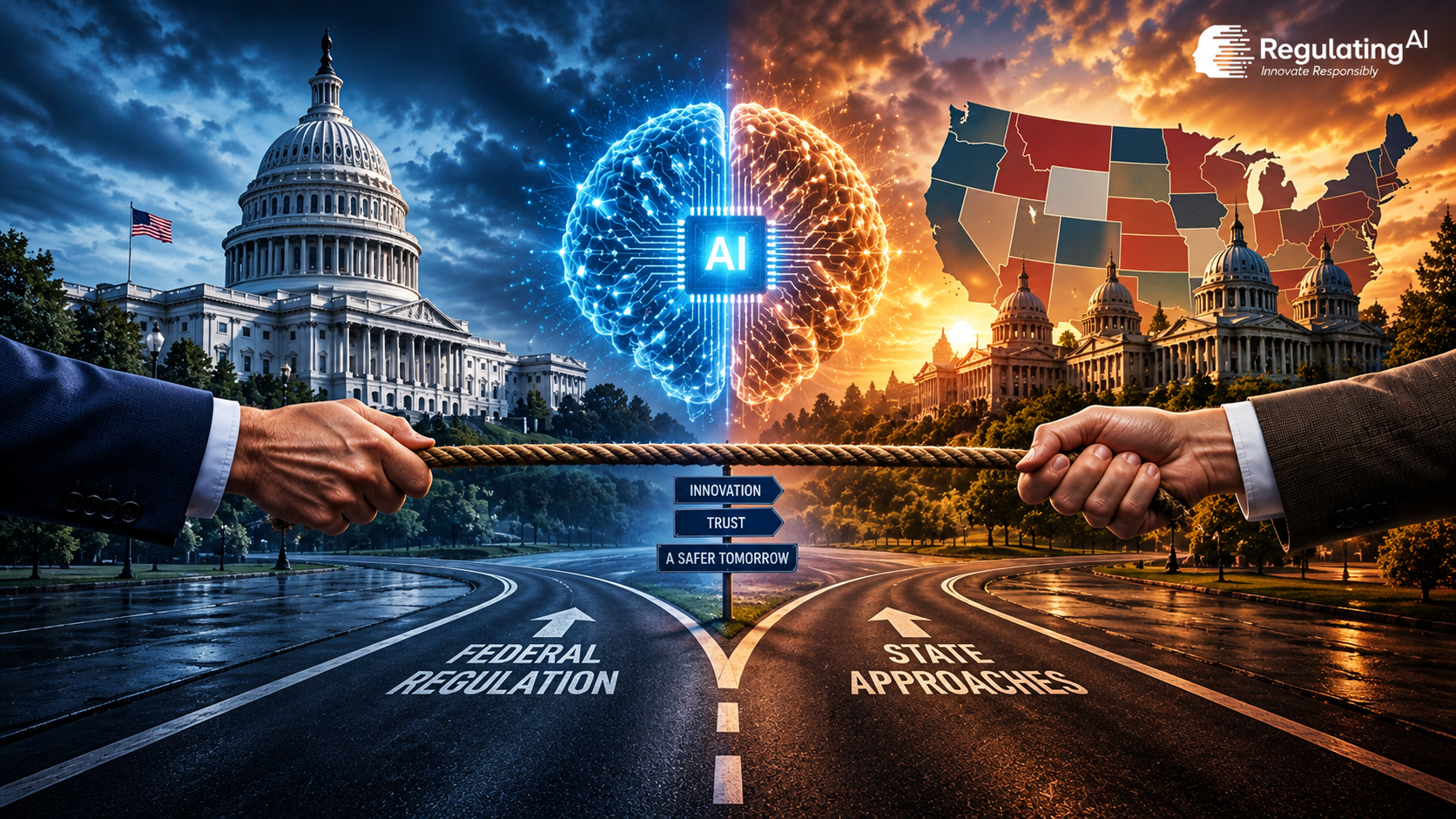
The United States faces a mounting conflict over who governs automated systems. State legislatures across the country are moving fast to pass strict AI laws. Meanwhile, federal agencies struggle to establish uniform rules for tech companies. States pass local bills while Congress remains divided on key proposals. This jurisdictional battle creates a complex legal environment for businesses today. Companies must navigate conflicting regional mandates while maintaining core technological operations.
Legal teams rely on a real-time AI legislation tracker to follow emerging bills. State attorneys general actively enforce existing consumer protection statutes against misleading software. Simultaneously, federal regulators rely on broad antitrust authorities to monitor market concentration. The lack of a national standard forces developers to adapt to varied enforcement actions. Small startups and tech giants alike face rising legal uncertainty across state lines. RegulatingAI is a non-profit organization focused on promoting responsible and ethical artificial intelligence regulation through grassroots advocacy and expert collaboration.
The Fragmented Regulatory Landscape
Building an ethical AI ecosystem requires clear and consistent legislative boundaries. However, individual states are advancing divergent legal standards for automated decision tools. California and New York target algorithmic discrimination and synthetic media risks directly. Other states focus heavily on protecting consumer data privacy and child safety online. This patchwork approach forces companies to build custom compliance features for different regions.
A unified AI governance framework remains elusive as state bills proliferate rapidly. Legal experts at firms like Morgan Lewis highlight the accelerating state enforcement trend. State prosecutors target deceptive marketing, algorithmic price-fixing, and undisclosed deepfake content. Meanwhile, liability risks expand as state legislatures grant consumers the right to sue. Businesses must adjust their operations continuously to satisfy localized accountability demands.
Federal Inertia vs. State Acceleration
Recent AI regulation news shows federal rulemaking moving at a cautious pace. Federal agencies favor innovation while applying existing statutes to automated software. However, state lawmakers view federal stalling as an invitation to enact local safeguards. Dozens of states actively introduce laws governing companion chatbots and deepfakes. This dynamic pushes state capitals to the forefront of national policy creation.
Tracking every new AI bill status has become essential for corporate legal departments. A bill in one state can set a binding precedent nationwide. For instance, laws restricting synthetic media create immediate liability for hosting platforms. Tech companies must evaluate their insurance coverage as private lawsuits increase. Divergent state standards raise compliance costs and slow down national product rollouts.
The modern legislative tug-of-war revolves around several key regulatory points:
- States create private rights of action for individuals harmed by deepfakes.
- Regulators target algorithmic pricing software under state-level antitrust laws.
- Lawmakers require explicit parental consent for minor interactions with companion chatbots.
- Federal agencies rely on legacy FTC and SEC rules to police misleading claims.

Balancing Innovation and Risk Management
The process of regulating AI demands a delicate balance between safety and growth. Enterprise leaders worry that fifty distinct state regimes will stifle domestic innovation. Compliance teams must continuously audit models to prevent bias and illegal data processing. Smaller firms struggle to absorb the legal overhead required by conflicting state mandates. Industry groups urge Congress to establish preemption rules to unify national standards.
Looking at global AI regulations, American enterprise faces pressure from abroad as well. The European Union enforces strict risk-based rules with heavy non-compliance fines. Global corporations must align their internal systems with international mandates like the EU AI Act. Meanwhile, US states copy select elements of European law into local statutes. American businesses now navigate a dual challenge of domestic fragmentation and global pressure.
Protecting Citizens and Fostering Growth
Leading tech groups engage in AI advocacy to champion unified federal standards. They argue that fragmented rules harm economic competitiveness and slow technical progress. Conversely, public interest groups push states to enact strong consumer protections immediately. These advocates emphasize that citizens need urgent defenses against harmful automated choices. Lawmakers remain caught between protecting consumers and preserving technical leadership.
Debates over AI public policy shape how developers train and deploy models. State laws increasingly mandate detailed documentation for automated high-risk tools. Developers must prove their algorithms do not produce biased or discriminatory results. Insurance carriers now adjust risk profiles based on a firm’s legal compliance posture. Proactive risk management helps companies maintain investor confidence amid shifting rules.
The Role of Industry and Civil Society
Businesses must strictly obey evolving AI compliance laws across every operating region. Legal experts recommend forming cross-functional committees to oversee corporate model deployments. Teams must document training data sources and conduct regular fairness audits. Robust internal controls help organizations defend their software during regulatory reviews. Preemptive compliance protects brands from costly state attorney general investigations.
Leading tech organizations publish ethical AI guidelines to establish voluntary industry baselines. These internal frameworks guide developers when legal statutes remain vague or incomplete. Companies set rules for data collection, model transparency, and output validation. Responsible internal policies reduce legal risk while federal and state lawmakers clash. Clear corporate guidelines build lasting trust with users and enterprise clients.
Community Insights and Security Standards
Industry analysts track AI regulatory news to forecast major shifts in legal liability. Legal scholars note that state lawsuits will shape future judicial interpretations. Emerging court cases evaluate whether shared pricing algorithms constitute illegal collusion. As case law develops, companies must update their algorithmic governance models. Watching judicial trends helps organizations anticipate new compliance mandates early.
A prominent AI think tank provides critical data to guide legislative drafts. Policy researchers analyze how proposed laws impact economic growth and consumer safety. Their findings help lawmakers craft balanced rules that target specific technical harms. Experts urge regulators to focus on high-risk applications rather than basic software code. Thoughtful research bridges the gap between complex engineering and effective lawmaking.
- Organizations prioritize safeguarding AI technology against dangerous misuses and systemic flaws.
- Security teams implement strict guardrails to prevent data leaks and model manipulation.
- Technical controls work alongside legal policies to secure enterprise data pipelines.
- Comprehensive safeguards protect platforms from both regulatory penalties and malicious exploits.
- Building secure systems remains the primary defense in a fragmented legal environment.
Collaborative Governance and Policy Realities
Enforcing comprehensive AI safety regulations requires deep cooperation between coders and regulators. State officials actively recruit technical advisors to evaluate complex software architectures. Regulators inspect training methods to verify that companies mitigate known bias risks. Joint task forces across states coordinate investigations into deceptive automated tools. Collaborative oversight ensures that legal mandates reflect true technical capabilities.
Developing a national government AI policy requires reconciling federal and state priorities. Federal leaders seek to maintain rapid technical development to compete internationally. Meanwhile, state leaders focus on protecting local citizens from immediate digital risks. Reconciling these competing goals remains the central challenge for American lawmakers today. A balanced national policy must protect public safety without stalling technical progress.
Community Engagement and Public Advocacy
Deploying a reliable tech legislation tracking system helps companies stay compliant across jurisdictions. Corporate compliance officers monitor hundreds of active bills in real time. Early detection of legislative changes allows engineering teams to adjust software specifications. Automated tracking tools reduce the risk of unexpected legal exposure in new markets. Staying informed is the first line of defense for modern digital enterprises.
The global AI researchers’ community provides technical clarity during intense policy debates. Computer scientists explain the practical limits of model explainability and data governance to lawmakers. Their technical input prevents regulators from writing impossible or counterproductive legal requirements. Academic researchers advocate for open-science frameworks that promote safe, collaborative testing. Expert technical guidance ensures that new laws remain practical and enforceable.
- Organized grassroots AI advocacy groups empower local citizens to demand digital accountability.
- Community leaders urge state representatives to restrict predatory algorithms and invasive deepfakes.
- Local activism has successfully driven the passage of groundbreaking state safety bills.
- Citizens demand that technology serve the public good without compromising individual privacy.
- Grassroots pressure ensures that state lawmakers remain responsive to public concerns.
Moving Toward Responsible AI Innovation
The modern focus on AI regulation shifts from broad ideas to concrete enforcement actions. State attorneys general utilize existing consumer protection statutes to penalize misleading tools. Companies face severe financial penalties for overstating system capabilities or concealing known risks. Legal enforcement creates strong incentives for firms to prioritize safety and transparency. Compliance is now an urgent operational priority for all technology providers.
Drafting effective AI policy demands a deep understanding of software engineering and human behavior. Policymakers must address systemic risks without restricting beneficial open-source research. Unintended consequences can arise when laws focus too heavily on basic model development. Smart frameworks target specific high-risk deployments rather than core algorithmic math. Balanced policy protects open innovation while holding harmful applications accountable.
Strategic Compliance and Advisory Leadership
Industry leaders regularly tuning into an AI policy podcast gain timely insights on emerging regulations. Executive interviews provide valuable context on how peer institutions handle compliance challenges. Listening to expert discussions helps leaders anticipate legal shifts before they become law. Media platforms play a vital role in educating the business community on regulatory trends. Continuous learning keeps executives prepared for shifting legal expectations.
Achieving complete AI regulatory compliance demands active coordination across legal and technical divisions. Corporate attorneys must work alongside data scientists to interpret complex legal language. Companies must establish clear documentation trails for all model training and testing procedures. Transparent operations demonstrate good faith efforts to satisfy regulatory expectations. Diligent compliance safeguards the enterprise against unexpected enforcement actions.
Strategic Compliance and Advisory Leadership
Consulting with seasoned AI governance experts helps organizations design robust compliance programs. External advisors audit internal software workflows to identify hidden legal and ethical risks. Experts help companies align their systems with recognized international and state standards. Professional guidance prevents costly legal missteps in a highly fragmented environment. Specialized advisors ensure that enterprise governance frameworks remain defensible under scrutiny.
- Understanding the broader AI regulatory landscape helps businesses plan long-term technology investments.
- Companies must evaluate how state privacy laws and federal oversight affect software viability.
- Strategic planning requires forecasting potential compliance costs across multiple regional markets.
- Organizations that anticipate regulatory trends can design flexible, compliant software solutions early.
- Clear regulatory insight enables safer, faster expansion into new markets.

Industry Participation and Governance
Engaging in an open AI policy dialogue allows businesses to help shape reasonable regulations. Industry representatives share operational insights with lawmakers during public legislative hearings. Direct feedback helps regulators understand the practical realities of software development. Constructive dialogue prevents the passage of overly restrictive or technically unfeasible laws. Collaborative policy-making produces rules that protect consumers while encouraging innovation.
Establishing an internal AI regulatory advisory board ensures continuous oversight of corporate software projects. The board includes legal scholars, technical architects, ethics advisors, and business leaders. Advisory members evaluate high-risk projects before commercial deployment begins. Internal oversight protects the company’s brand reputation and ensures compliance with state laws. A dedicated advisory board keeps the enterprise aligned with evolving ethical standards.
Unreasonable regulations stall innovation, while no regulation risks public trust. Join our global network of tech leaders, legal scholars, and researchers working together to build balanced, enforceable AI governance. Subscribe to RegulatingAI.