
The AI Policy 100
The people shaping the rules of AI.
An annual ranking of the hundred individuals with the greatest influence on how artificial intelligence is governed - scored against five published criteria, verified against primary sources, and open about how it was built.
If you were named
You are an honoree
What the recognition includes,
and what is asked of you.
First time here
What this list is
What it measures, and why
it exists.
Looking someone up
How People are chosen
The five criteria and the full
method.
Reporting on it
Press & media
What we will confirm, and
who to ask.
The 2026 List
Top 100 Policy Experts
Meet the leaders whose decisions, research, advocacy, and expertise are shaping global artificial intelligence policy and governance.

Michael Kratsios
White House Office of Science and Technology Policy (OSTP)
Director / U.S. AI Policy Lead

Henna Virkkunen
European Commission
Executive Vice-President for Tech Sovereignty, Security and Democracy
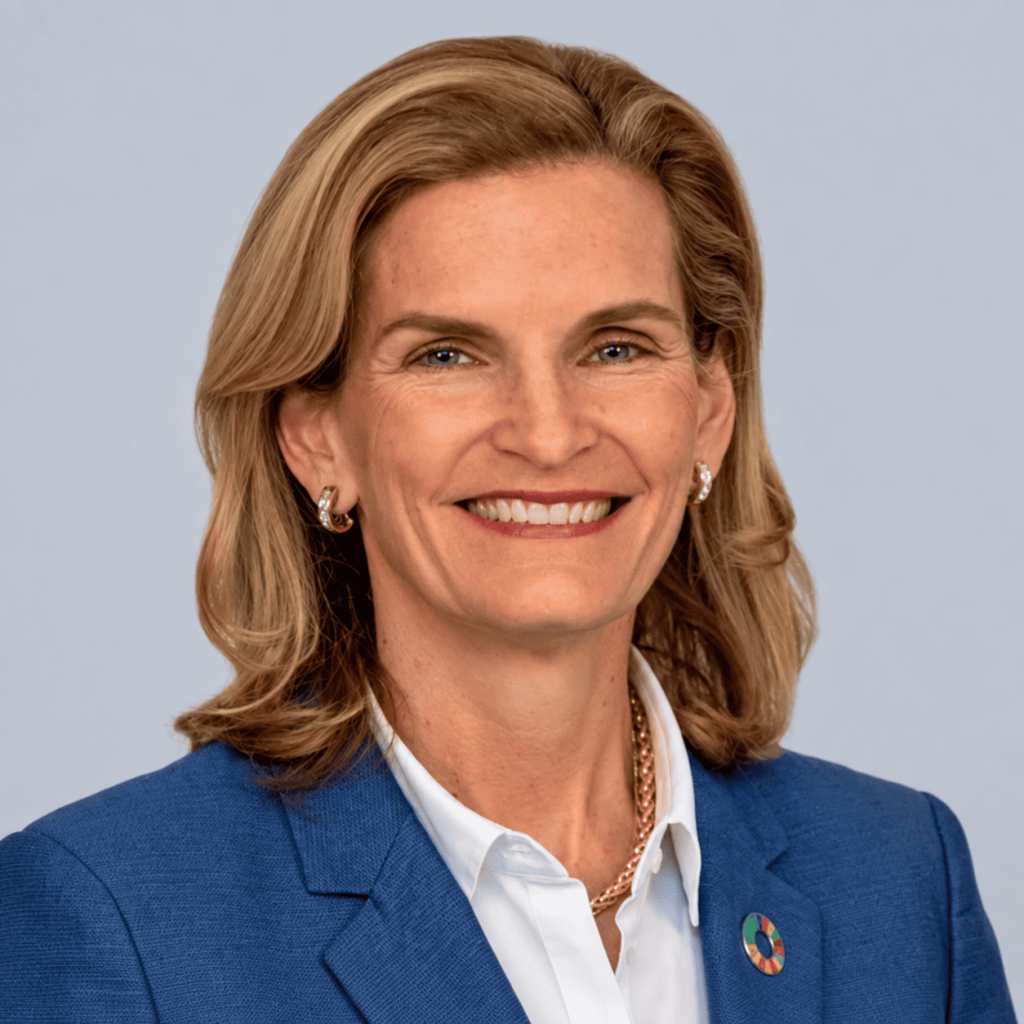



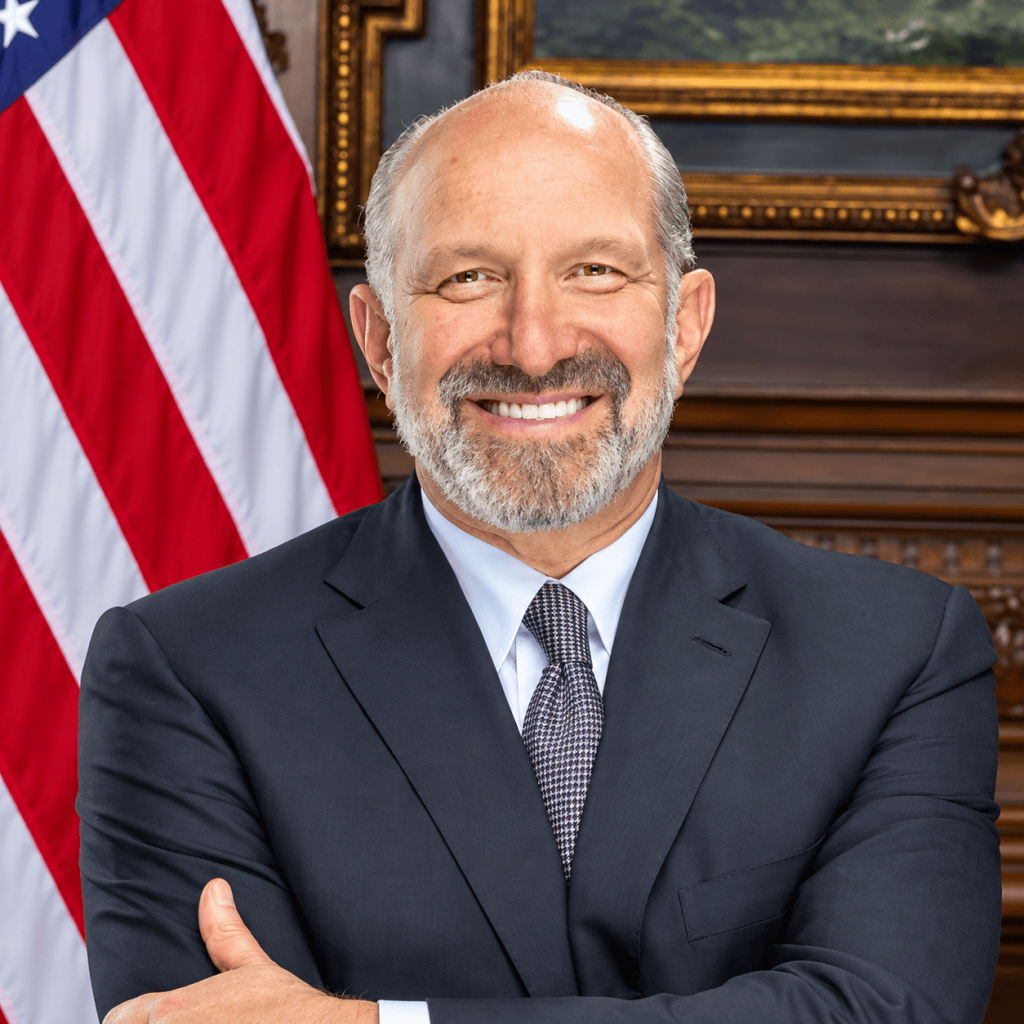
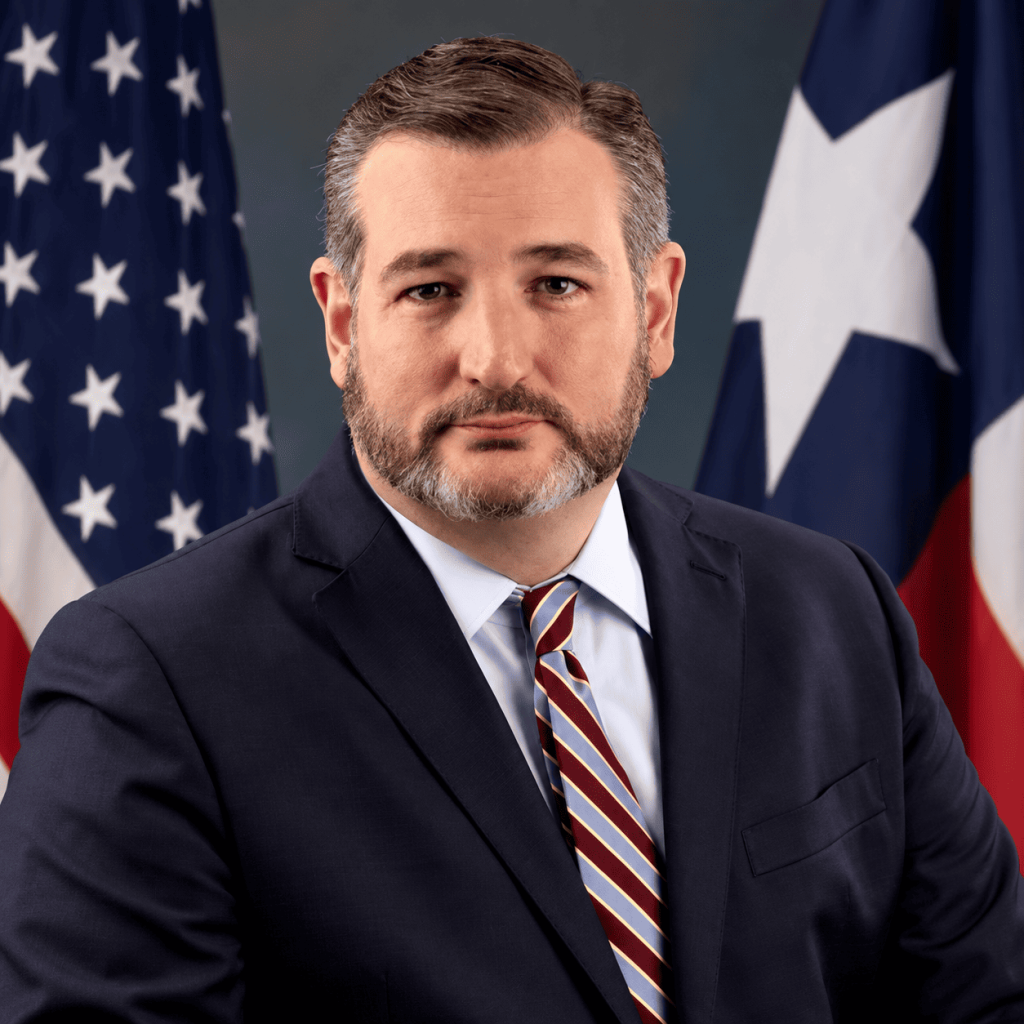

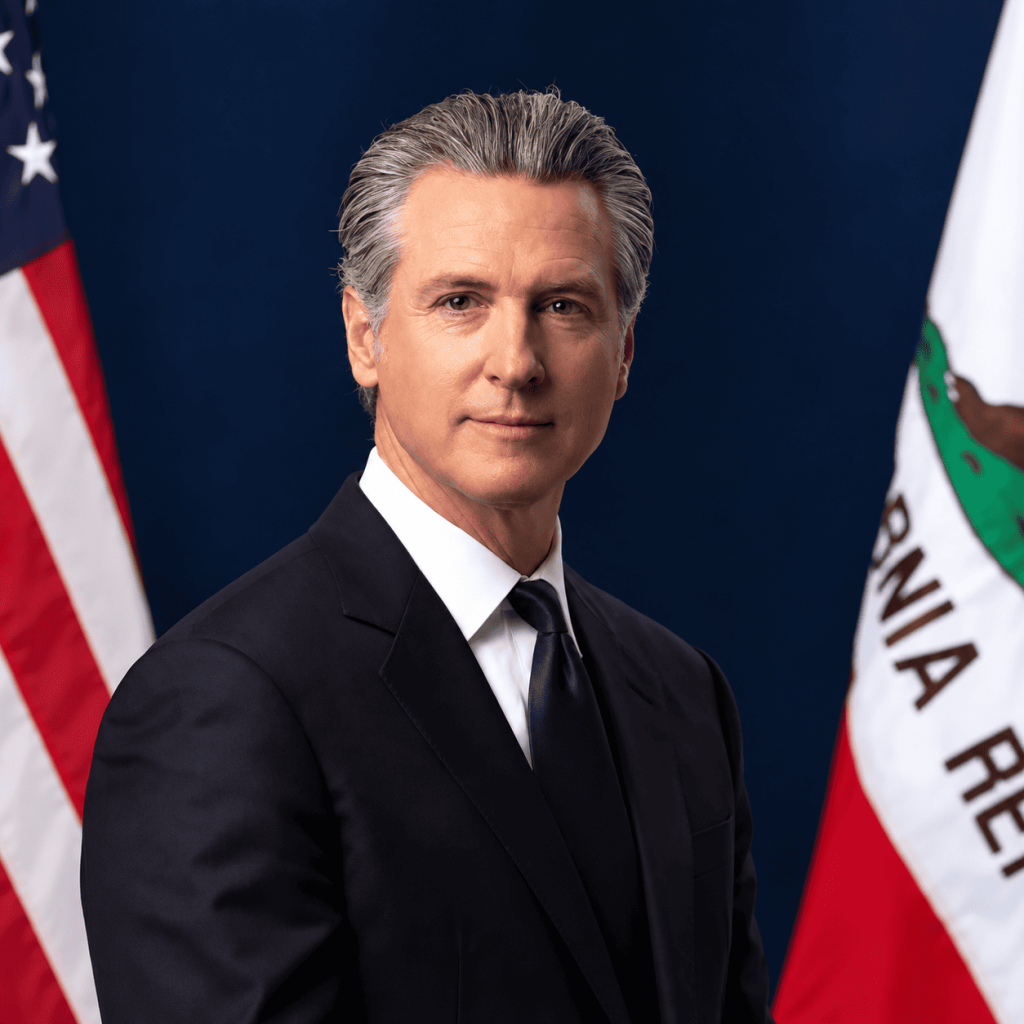



Ashwini Vaishnaw
Ministry of Electronics and Information Technology (MeitY), India
Union Minister

Omar Sultan Al Olama
UAE Office of Artificial Intelligence
Minister of State for Artificial Intelligence





 #20
#20
Brando Benifei
European Parliament
MEP; Co-rapporteur, EU AI Act

 #22
#22
Zhuang Rongwen
Cyberspace Administration of China (CAC)
Director



What It Is
A record of who actually writes the rules
The AI Policy 100 identifies the hundred people who most shape the rules artificial intelligence has to follow — the regulators drafting them, the legislators passing them, the officials enforcing them, and the researchers, jurists and advocates who set the terms of the argument
It is published once a year by Knowledge Networks, the organization behind RegulatingAI. It is an editorial judgement, made against criteria we publish in full and evidence we check line by line. No one can apply to it, nominate themselves onto it, or pay to appear on it.
1. Independent
No placement is offered for sale - no entry fee, no sponsored slot, no consideration of any kind.
2. Annual
One edition a year against a fixed method, so movement between editions carries meaning.
3. Global
Scored across national regulators, legislatures, multilateral bodies, courts, academia and civil society.
4. Evidenced
Every name, title and claim is verified against a primary source before publication.
Why It Matters
The rules are being written now – mostly out of sight
AI governance is being decided in this decade, by a comparatively small number of people. What they determine — what must be disclosed, what must be tested, what may not be built — will outlast most of the systems they are regulating.
Very little of that work happens in public. It happens in agency rule-making, in committee drafting, in standards bodies and technical annexes, across jurisdictions that rarely read each other's output. The result is a field where almost everyone has an opinion about AI policy and very few people can say who is actually setting it.
This list is an attempt to make that structure legible: a map of where authority genuinely sits, published with its workings attached so that anyone can argue with it.
How Influence Is Measured
One hundred points, divided five ways
Every candidate is scored one to five on each criterion. The five scores are weighted as below and combined into a single comparable figure. The weights do not change between editions.
Rule-Making
Influence
Direct authority over rules that bind — drafting them, passing them, enforcing them, or interpreting them.
Scope of
Impact
How many people, institutions and markets fall within reach of the decisions they make.
Current
Activity
Demonstrable activity during the edition year. Past influence does not carry itself forward.
Cross-Jurisdiction
Reach
Whether their influence crosses borders, or shapes how other jurisdictions approach the same question.
Public
Engagement
Contribution to the public argument — testimony, published work, standards participation, advocacy
The Process
How the list is built
Six stages, in order, every year.
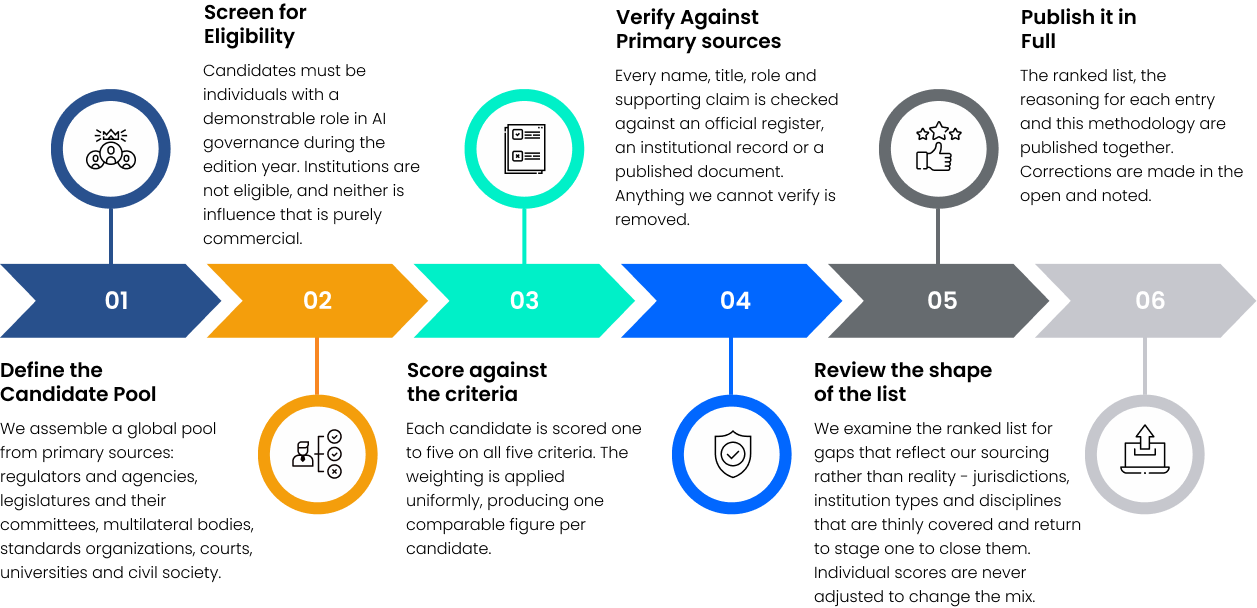
Notice of Independence
No placement on The AI Policy 100 is offered for sale, and none ever will be. There is no application, no entry fee, no sponsored placement, and no paid consideration in any form.
Knowledge Networks funds its work through its media, events, education and research activities. No commercial relationship — sponsorship, membership, partnership or advertising — influences who appears on this list or where they rank. Honorees are informed after selection is complete, never consulted during it.
If anyone suggests to you that inclusion can be bought, arranged or negotiated, we would like to know.
editorial@knowledgenetworks.com.
For Honorees
If you have been named
Recognition on this list carries no obligation. You are not required to respond, participate, or provide anything.
An individually numbered certificate of recognition, digital and print.
A profile on the published list, with the reasoning for your entry
A badge and suggested wording, should you wish to share it
An invitation to the honoree network and its briefings
Every certificate carries a unique number that can be checked against the published list. If any detail about you is wrong, write to editorial@knowledgenetworks.com and we will correct it.
For Press & Media
Reporting on the list
The list, the reasoning behind each entry and this methodology are public and free to cite with attribution.
The ranked list and per-entry reasoning
Breakdowns by jurisdiction, institution type and discipline
Interviews with the editorial lead on method and findings
High-resolution logos, seals and honoree assets
Press enquiries and embargo requests:
press@knowledgenetworks.com. We will discuss how any individual entry was assessed, and we correct errors publicly.