
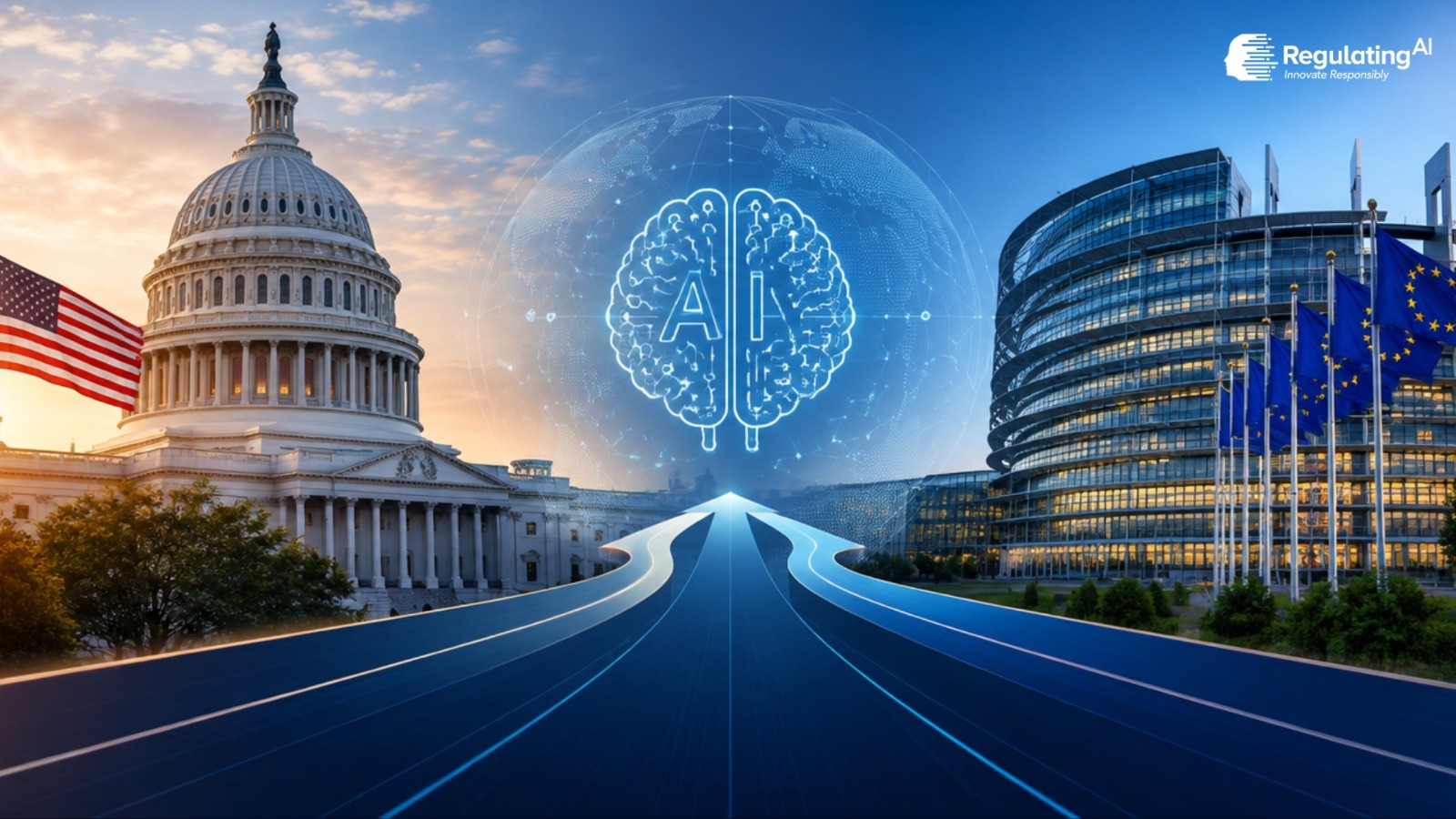
Artificial intelligence tools evolve at lightning speed across modern society. Lawmakers worldwide now race to establish guardrails for these powerful technologies. This rapid shift creates a complex, changing landscape for AI policy. From Washington to Brussels, the various governments develop individual approaches for dealing with the risks associated with technology. This issue is closely followed by companies, scholars, and individuals. The officials now need to strike a balance between innovation and security. The conversation between Capitol Hill and Brussels shapes digital power worldwide. Both powers must collaborate closely to ensure safe technological progress. Balanced cooperation remains essential for effective AI policy everywhere.
The Transatlantic Divide in Tech Governance
American and European regulators approach artificial intelligence from opposite perspectives. Lawmakers in Washington prefer flexible rules that encourage rapid market growth. In contrast, European officials prioritize strict individual privacy and fundamental human rights. These contrasting views create separate paths for technology creators and global consumers. You can clearly see this political divide in action on Capitol Hill. Meanwhile, European agencies build massive statutory structures to guide future development.
American policymakers rely on market forces to correct unintended software defects quickly. European authorities insist on rigorous testing before algorithms reach ordinary consumers. This basic disagreement impacts how innovators develop modern software tools worldwide. Global software companies must therefore navigate two entirely different sets of expectations. The divergence complicates cross-border data flows and international business expansion significantly. Harmonizing these two viewpoints remains a major challenge for global AI governance.
Washington’s Market-Driven Approach
The United States currently favors targeted oversight across existing federal agencies. Rather than passing one broad law, Congress uses sector-specific standards. The above-described tactic directly influences the development of US AI regulation. The agencies, like the FTC, clearly define the limits to deception through automation. The National Institute of Standards and Technology provides technical risk frameworks. American leaders want safety rules without crushing domestic startup momentum.
Executive branch officials issue directives to guide safe software procurement across government. Federal departments test automated systems thoroughly before public deployment occurs. These practical measures establish clear accountability benchmarks for commercial contractors. National security agencies monitor foreign development of advanced compute infrastructure closely. Lawmakers prioritize domestic innovation to maintain global leadership in key industries. Strong market competition drives federal strategy across the technology landscape.
Key Drivers in American Oversight
State capitols actively fill the gaps left by federal inaction. California, Colorado, and other states pass their own strict tech laws. This growing state-level patchwork transforms AI policy across state borders:
-
Consumer Data Safety: States limit how algorithms process personal biometric records.
-
Bias in Algorithms Prohibited: Regulations address algorithmic bias in recruitment, insurance, and loans.
-
Deepfake Protection: New laws punish deception through synthetic political and personal media.
-
Critical Infrastructure: Rules require risk assessments for automated utility grids.
Brussels Sets the Worldwide Benchmark
Across the Atlantic Ocean, the European Union takes a bold, comprehensive stance. The landmark EU Artificial Intelligence Act classifies systems by user risk. This sweeping statute defines current EU AI policy on the global stage. The European framework strictly bans applications that threaten fundamental human dignity. It imposes heavy requirements on high-risk software in healthcare and policing. These offenders are punished financially by imposing huge fines on them, running into tens of millions of euros.
The national supervisory bodies from member countries have responsibility for implementation of the law. A centralized European Artificial Intelligence Office coordinates cross-border investigations and reviews. This coordinated system ensures uniform enforcement across the entire European continent. The European approach creates the famous “Brussels Effect” across international markets. Global enterprises often update worldwide standards to match European law. Consequently, European rules guide modern AI policy far beyond European borders.
Aligning Frameworks Across the Globe
International organizations strive to align these divergent domestic legal codes. The United Nations and G7 groups draft common safety principles. These diplomatic efforts build the bedrock of global AI governance. No single entity controls algorithms across international digital borders. Nations share technical benchmarks to monitor high-powered frontier neural networks. Diplomatic envoys work tirelessly to prevent disjointed, conflicting digital rulebooks.
Developing nations actively demand a voice in these high-level international discussions. They want equal access to foundational computing power and educational resources. Inclusive international bodies strive to prevent a widening digital economic divide. Global consensus emerges around the ethical handling of personal consumer identities. Representatives agree that synthetic media requires reliable attribution and transparent origin marks. Technical commonalities allow multinational teams to adhere to various regional laws.
International Coordination Efforts
International summits yield joint declarations on catastrophic automated threats. Leading tech powers sign mutual testing pacts for major foundation models. These shared standards strengthen international AI policy against cross-border risks:
-
Frontier Model Audits: Tech labs open novel architectures to independent researchers.
-
Harmonized Incident Reports: Agencies share automated vulnerability alerts across borders.
-
Watermarking Standards: Nations promote cryptographic watermarks for generated files.
-
Energy Metrics: Experts establish green standards for massive data training centers.
Corporate Adaptation and Internal Oversight
Private companies must react quickly to these rising regulatory demands. Corporate boards now establish formal internal oversight committees. Enterprise compliance teams actively deploy comprehensive AI governance programs. These internal initiatives audit automated workflows for potential data leaks. Engineers test datasets to detect underlying cultural and historical biases. Modern corporate compliance balances algorithmic speed with verified institutional accountability.
Smart firms build cross-functional teams combining law, ethics, and computer code. They evaluate operational vulnerabilities before launching models onto the open market. Thorough safety reviews anchor practical AI policy within enterprise environments. Senior executives conduct thorough vendor assessments before integrating third-party automated tools. They document algorithmic inputs and data sourcing methods with extreme precision. Clear internal records protect organizations during official regulatory audits and inquiries.
Looking Ahead: The Next Regulatory Wave
Regulatory bodies plan to address agentic tools and autonomous workflows next. Independent agents can make transactions and execute code without human supervision. This breakthrough demands swift adjustments to existing US AI regulation. Future frameworks will focus heavily on compute thresholds and hardware supply chains. Governments closely inspect semiconductor shipments and cloud server distribution. Physical hardware access now anchors modern global AI governance.
People want more transparency with the advent of machines generating text and making decisions. Democracies need to demonstrate that public measures can keep up with private technology. Tomorrow’s rules will determine how society protects human agency. Legal challenges regarding intellectual property and fair use will intensify significantly. Courts must decide whether training on public creative content infringes existing copyright. These landmark judicial rulings will fundamentally reshape commercial model training practices.
Stay Ahead of Global Tech Rules
Technological rules change every single week across the globe. You need direct, timely analysis to protect your organization.
Subscribe to the AI Policy Briefing to receive critical regulatory updates directly in your inbox.
FAQs
1. What is the future of AI policy in the United States?
The United States will likely maintain a targeted, sector-by-sector approach. Federal agencies like the FTC will enforce rules using existing consumer protection laws. Meanwhile, individual states will continue passing specific algorithmic accountability and deepfake statutes.
2. How does US AI regulation compare with EU AI policy?
US regulation depends on the voluntary standards of the industries themselves. European authorities apply a comprehensive system of legislation and penalize it strictly. The US values flexibility for business. Europe emphasizes the importance of the fundamental rights of an individual.
3. What is the difference between US and European AI regulations?
Europe uses a single, centralized statute that categorizes artificial intelligence systems by risk. The supervision roles are distributed among a number of US government bodies. European regulations have statutory penalties. On the other hand US policies are normally subject to enforcement by the regulatory body.
4. Where is global AI governance heading next?
International bodies focus on shared safety evaluations for powerful frontier models. Global coalitions like the G7 and the United Nations build cooperative testing networks. Diplomatic leaders seek common ground on watermarking, transparency, and computational security.
5. How will AI policy change in the next few years?
Lawmakers will shift attention toward autonomous agentic systems and hardware supply chains. Statutes will establish stricter accountability rules for automated corporate decisions. Governments will also mandate clear disclosure standards for synthetic audiovisual media.
6. What are the biggest upcoming AI policy changes?
The European Union will roll out full enforcement phases of its comprehensive AI Act. The US will debate formal federal privacy legislation and export controls on advanced chips. International bodies will expand safety audits for general-purpose foundation systems.