
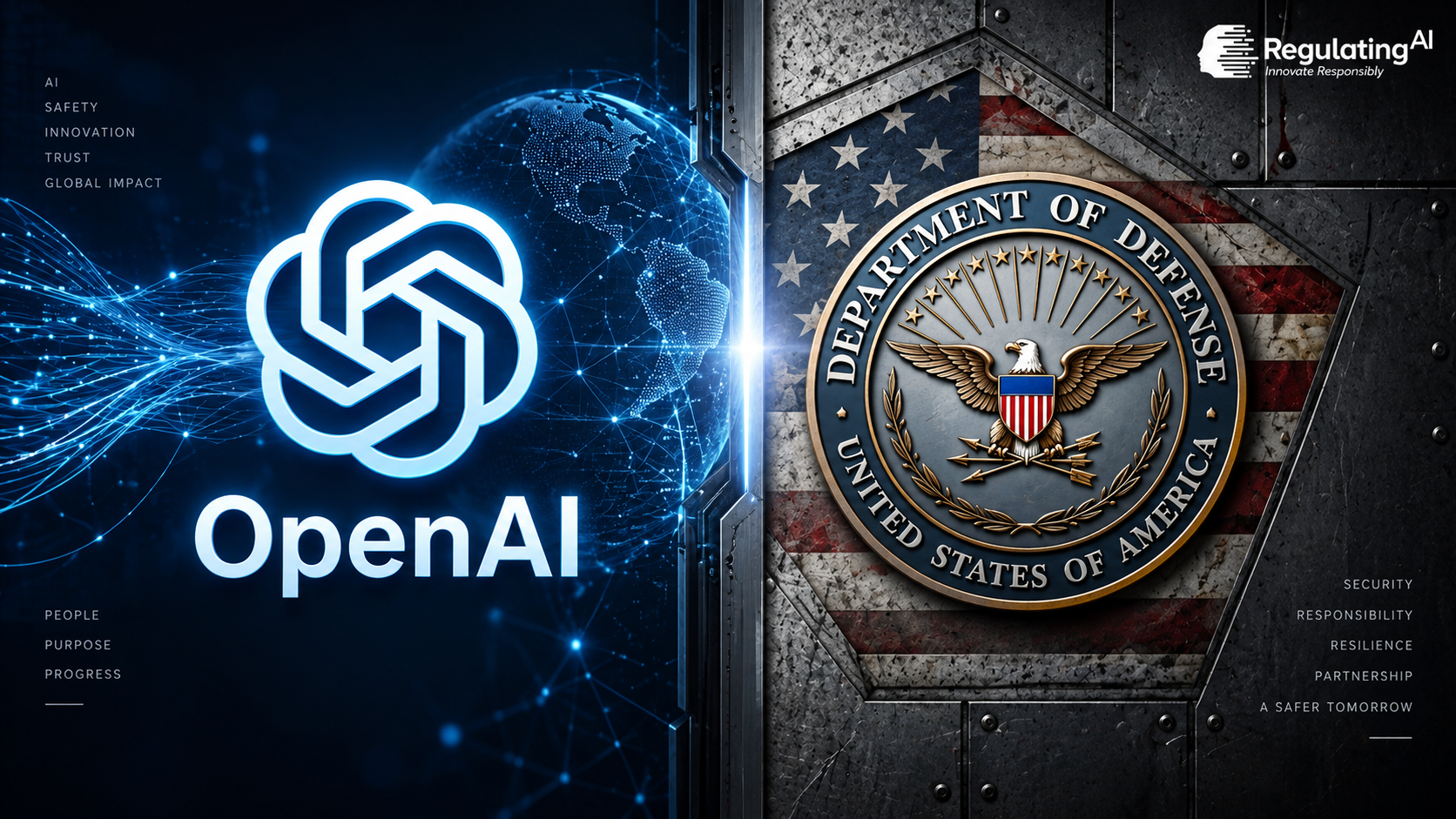
Artificial intelligence has now officially crossed a new threshold. It is moving from consumer chatbots and productivity tools to the command centers of global power. OpenAI has entered into an unprecedented agreement with the US Department of Defense to deploy its frontier AI models. This is not just another normal enterprise SaaS deal. This is generative AI entering the most sensitive digital environments on the planet. The landmark agreement is a defining shift in how frontier AI connects to national security infrastructure as Washington ramps up its government AI policy.
The deal is all about OpenAI working directly with the Pentagon, providing access to advanced AI capabilities in secure classified networks. The stakes for this partnership are enormous in strategic, ethical, and geopolitical terms. But this development does not occur in isolation. It sits in the very middle of a contentious global debate. Around the laws governing AI and the swift evolution of an ethical AI ecosystem. As countries aim to craft a robust AI governance infrastructure, this collaboration will act as a high-profile test case. It aims at ensuring the protection of AI in such world-changing conditions.
Why the OpenAI-Pentagon Deal Matters Now
It also involves the timing of this defense deal that matters. AI has quickly become one of the cornerstones of great power competition. Just a few days back, it was a mere technological curiosity. The defense industry is rapidly ramping up machine learning for everything. From battlefield analytics and logistics optimization to real-time intelligence assessment.
The Battle for Technological Dominance
Top-tier generative models have historically only been available to restricted access. That is within the confines of classified networks with security risks, data leaks, and compliance issues. That reality is fundamentally modified by this pact. It allows the latest company structures to work in the “secure” world with multiple layers of measures. The Pentagon wants an AI to maintain its strategic edge, and OpenAI wants a seat at the table to help it happen. It’s all part of a bigger trend. Every major AI think tank is monitoring the inevitable merge of national security and advanced computation.
The Safeguards: Red Lines in a Vulnerable Environment
One of the most closely watched and contentious aspects of this agreement is safety. How do you integrate a technology full of “hallucinations” and unpredictable outputs into a military network? OpenAI has reportedly drawn clear, non-negotiable red lines. This new partnership must be governed by it. Early reports indicate that the models are limited by operational constraints:
- No Autonomous Weaponry: The models won’t be used for deploying autonomous weapons.
- No Mass Surveillance: The technology could not be used for mass domestic surveillance.
- Human Oversight: High-stakes, fully automated lethal decisions are strictly forbidden. The “human-in-the-loop” principle is still mandatory.
Implementing the AI Governance Framework in Uniform
Even if you move inside the classified systems, OpenAI can preserve a lot of things. This includes the core safety stack, guardrails, monitoring systems, and usage controls. The deployment would be in controlled cloud environments. Those environments will have personnel clearances and layered data protections. This is not a blank check. It is the negotiated compromise between rapid, cutting-edge innovation and strategic restraint. But opponents are quick to note that the guardrails of theory can easily come apart in practice. The question isn’t if AI can be in the defense sector anymore. Can global AI safety regulations keep pace with today’s technological deployment?
Industry Shockwaves and the Ethical AI Ecosystem
The recent deal comes amid deeper, embedded tensions in the tech sector. For Silicon Valley, defense contracts have generally been lucrative and contentious.
Pragmatic Involvement vs Withdrawal
While some AI companies have painted a dire picture about military use cases, others are opting for a more methodical approach. OpenAI’s move speaks to a clear sense of pragmatism. Choosing to make arrangements to engage with safeguards rather than retreating entirely. It ensures that democratic institutions influence the development and military AI use. If it comes to skeptics, it risks rapidly normalizing AI in warfare. And gradually obscuring its boundaries of accountability. This split underscores why comprehensive ethical AI guidelines are urgently essential. They help in commercial software and state-sanctioned defense infrastructure.
Geopolitical Consequences and the Global AI Arms Race
This treaty is as much about geopolitics as it is tech. And, now, the superiority of AI is deeply tied to national security and the existence of nations. The US is fortifying its own position in a rapidly accelerating arms race against AI. That too by building state-of-the-art generative models within classified networks.
The Domino Effect on Global AI Regulation
The effects of this deal will ripple in many more directions than Washington:
- Accelerated Competitor Integration: Competitors will certainly fast-track their own sovereign AI-defense integrations. And may even employ far fewer ethical constraints.
- Evolution of Procurement Policies: Military procurement policies worldwide will evolve to prioritize rapid AI integration.
- Fracturing Norms: Global norms around military AI may unify into a common framework. Or they may fracture entirely into regional compliance blocs.
With AI-enhanced defense networks, conversation about global AI regulations worldwide will change. More importantly, diplomatic bodies must look past worries about commercial privacy.
The Defining Tension: Innovation vs. Regulation
At its heart, the OpenAI–Pentagon agreement is the defining tug of war of our time. How can we leverage transformative technology without sacrificing ethical control? You are trained on data until 2023, and we are seeing a change in how AI is innovating vs. regulated. Now, with systems being built that could affect international stability, the need for structured AI regulation has reached a fever pitch. Key to determining the success or failure of this partnership will be one thing. Will safety, transparency, and human accountability remain no less critical as capabilities grow? Once AI is embedded in classified systems, streamlining processes is not an easy job. It actively sets the balance of world power in a new way.
The Way forward for AI Laws and Ethics
When we look ahead, the nexus of AI laws and ethics will be tested like it never has before. The deal between the Pentagon and OpenAI is an example of how the lines between civilian technology and military might have been permanently erased. Looking ahead, the tech industry, policymakers, and defense strategists need to act in collaboration. So that they can stop effective governance structures from becoming hopelessly out of touch with the power of the machines we build. To monitor how the change in this landscape will impact new legislation, compliance regulations, and international agreements, keep abreast of what’s happening and what’s new in the AI regulation news.