
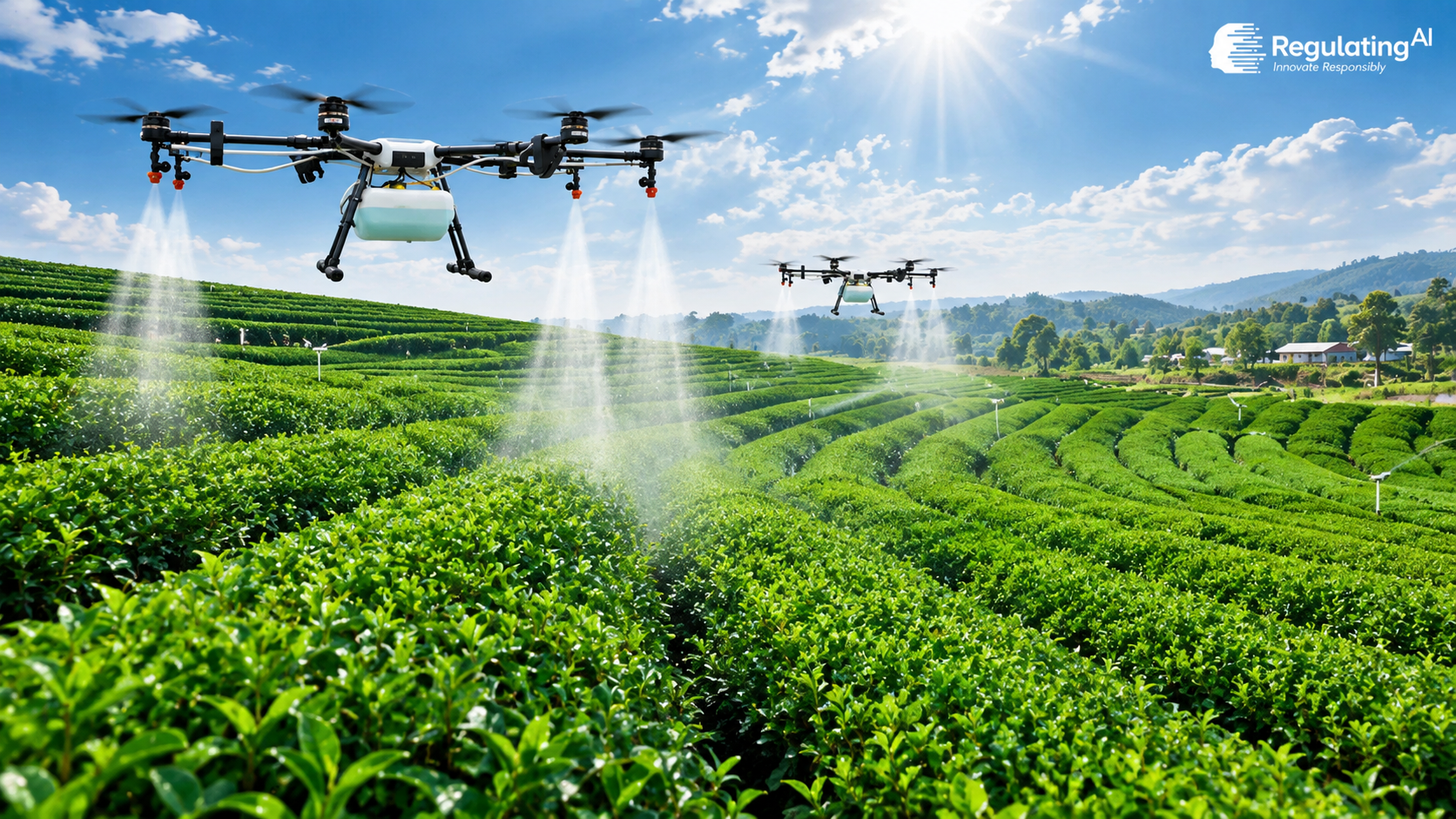
The balance between tradition and innovation has always been there in agriculture. For centuries, farmers have relied on experience and manual effort. So that they can keep vegetation protected from threats like weeds, pests, and disease. But the challenges from this past century today are beginning to change with new technologies. These are changing how these problems are managed.
Central to the project is the Royal Agricultural University. It is one of the first AI institution focused on ‘real-world workability.’ Scientists there are using AI drones for scanning crop fields for weed and shrub identification. The purpose is straightforward but powerful. They are trying to make it easier for farmers to manage weeds while reducing their harm to the environment.
The Challenge of Weed Control
Weeds may appear to be an insignificant problem. But they have a tremendous effect on crop productivity. They vie with crops for key resources: sunlight, water, and nutrients. But unchecked, weeds can greatly reduce yields and impact a field’s overall health. As a rule, farmers use herbicides to control weeds.
Yet these chemicals are frequently used for entire fields. Even when weeds are present in small patches. This is a blanket approach that can be very expensive and can lead to some environmental issues. Like chemical runoff into local water supplies or the emergence of herbicide-resistant weeds. The necessity for these more organized, ecological weed management systems is, hence, urgent.
How AI and Drones Are Transforming the Game
Researchers at the Royal Agricultural University are investigating the use of drones with AI technology to help solve this problem. Researchers can fly drones at a low angle through their fields. And take HD photos of crops and surrounding greenery. These images are then processed by an artificial intelligence model. These models are trained to take the visual differences among crops and weeds into account.
Emmanuel Zuza, the senior lecturer on the subject of ‘Environmental Management and Sustainability’ at the university, noted that farmers really need this system-based technique to pinpoint exactly where weeds are. Instead of spraying chemicals over a whole field, farmers might want to go only where they find weeds. More targeted control, like reducing the spread, makes weed control smarter and effective.
AI Drone Detection Steps
- Flight and Capture: The drone follows an automatic grid pattern across the field, capturing thousands of HD images.
- Data Processing: The drone uploads the images to a cloud platform or onboard computer.
- AI Analysis: The machine learning model analyzes the images and flags weed locations. And this produces a digital weed map.
- Targeted Application: The farmer takes the map and uploads it to a smart tractor or spraying drone. That gives a patterned application only, so as to use herbicide only on the flagged spots.
The Potential Benefits for Farmers and the Environment
Cost savings is one of the most direct benefits. When using less herbicide, farmers can reduce costs of production. And can be more productive. Targeted spraying also contributes to decreasing the environmental cost of agriculture. Fewer chemicals added to the soil and surrounding ecosystems. This means healthier land and less risk to wildlife and water systems. And there’s another major benefit: fighting herbicide resistance. Many weeds have already cultivated resistance to common chemicals. Farmers, if they can use herbicide less, may be able to halt the spread of these resistant weed species.
AI Training for Weeds Identifying
Central to the project is training AI systems to discriminate weeds from crops. This may sound far more difficult than it must be to understand. As crops grow taller, weeds can hide among them, making visual detection difficult. Students and researchers are using various ML algorithms. And this is enhancing the AI’s ability to read images from the field. The models can learn to detect patterns in leaf shapes, textures, and plant structures. Curiously, the same technology could be applied to insects and other pests as well. This will result in even more sophisticated forms of precision agriculture.
The AI Assesses Key Visual Indicators
- Leaf Shape and Geometry: Distinguishing the broad leaves of some weeds from the narrow blades of cereal crops.
- Color Spectrum Variations: Identifying subtle differences in green hues that indicate different plant species.
- Texture Patterns: Identify roughness or hairiness through surface coverage of leaves unique to specific weeds.
The Role of Global Networks and Governance
The new techs are now moving from university labs to the hands of the industrial world. So, they need strong infrastructure support. An AI think tank can determine the impact of automated tools on food security. These groups are often linked to media organizations and agricultural researchers. They strive to investigate the long-term costs of automation in agricultural communities. Also, there must be clear guidelines for the deployment of drones with huge amounts of land and crop data. They need to be aware that data collection must be private and secure. That is why organizations are developing an ethical AI global network. This worldwide connection helps researchers safely disseminate data across borders. And speeds up discoveries for farmers the world over.
Scaling Technology Right and Responsibly
Technology must be scalable if we are to bring real change about. Technology will need to progress to be an improvement and not just in small trial fields. The development of affordable, easy-to-use tools for agriculture is crucial. So that we can go for the large-scale adoption of responsible AI. Not the large farm enterprises alone, so the tools are accessible for farmers. And farmers can be easy to do without big agribusinesses.
The Importance of an “Ethical Framework”
There are new risks in using AI as an intervention in food production. For example, an algorithmic error that mistakes a healthy crop for a weed and kills it. Agricultural tech companies are working to implement an ethical AI deployment framework. This will help them avoid these mistakes. This framework ensures that whenever anything automated takes place. Major decisions for which a human operator has to review them are never made. Without a human on board protecting the food supply from system glitches.
Collaborating on Global Standards
Farming technology is an international field of operation. A drone made in one country might be put onto a farm in another. This means technology developers also need to play their part to align global AI standards. This way drones and smart tractors can chat with each other wherever they got built.
Collaborating to Build Future Agriculture Solutions
The future smart agriculture strategy will be based on a partnership between universities, tech companies, and farming cooperatives for AI. Such partnerships will provide funding and data to train ML models.
Shared Ecosystems: The Power of Them All
AI ecosystem collaboration can spread resources across the agricultural sector. A software firm might send its image-recognition algorithm to a drone maker. The drone maker tests it out on the land of a local cooperative. That collaboration forms a virtuous cycle of trust. It will ultimately make the technology itself safer and more reliable.
Educating the Next Generation
This momentum must be continued. So academic institutions are establishing an AI education and policy network. This network provides training on the technical aspects of AI and regulations of drone flying. These programs fund AI projects and fellowships, ensuring a continuous pipeline of talent. This pool of talent will be ready to take on the agricultural challenges of the future.
Real Farms From Research Fields
The technology is currently tested and improved by scientists on the university land. But the next phase of the project will be outside the lab. They are already collaborating with local farmers. There they will deploy drone monitoring systems on working farms.They aim to prove how AI solutions could boost existing farming practices through technological trials on a range of crops. Scientists regularly work with AI policymakers on airspace safety and data ownership rules. So that they can validate the tools as they relate to local laws.
Sense of a More Intelligent Future in Farming
Drones and AI used in combination are a great move towards more sustainable and affordable agriculture. It would save money and the planet. Also, it will boost crop yields by enabling farmers to spot weeds and take immediate action. There are tech-savvy businesses and people who are already using them as it progresses. These things show how AI is beginning to redefine a lot of industries other than tech. The future in the world of modern farming will not be made only by farmers. The quiet drone of intelligent machines flying high above will be working on providing a stable and sustainable supply of food for all.