
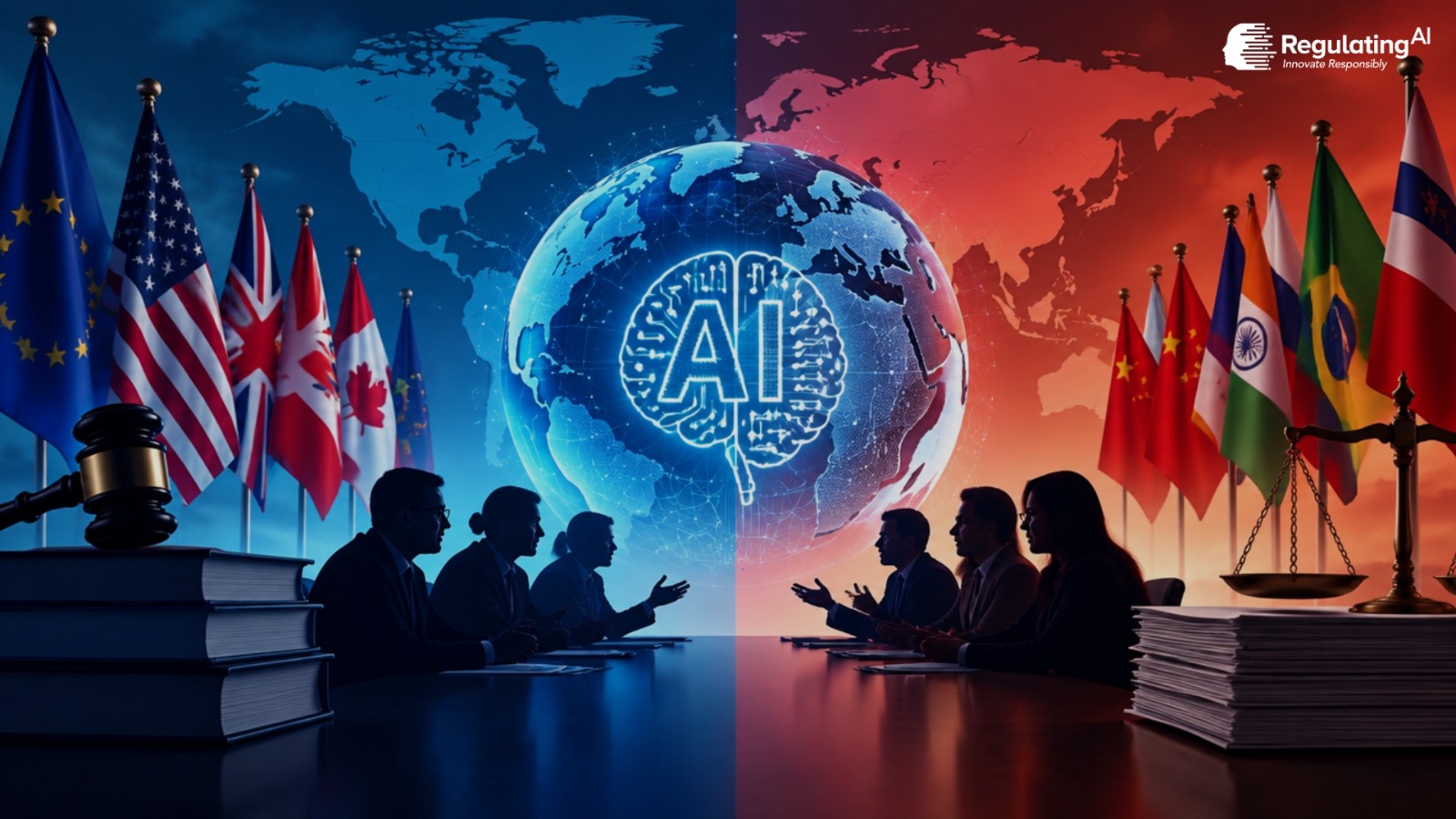
AI links computers around the world. However, it is regulated with an entirely different perspective by leaders. Today, many governments have started imposing tough global AI regulations. This is because they need to control the damage. Meanwhile, they want to safeguard the data of their citizens too. However, such differing sets of laws generally don’t align with other ones globally. Such fragmented legal systems create friction among the developers and software users globally. Technologists seek global legal frameworks. However, domestic interests force leaders to go in a different direction. Every economic zone has its own way of balancing economic growth and public safety.
The Splintered Approaches to AI Oversight
The world’s major powerhouses approach technology based on different philosophical views. For example, taking a closer look at AI laws per country, one can find three different paradigms of digital regulation:
- European Union: Citizen’s rights, human dignity, and preventive bans on technologies.
- United States: Fast development of market and selective agency actions in specific sectors.
- China: Industrial development and total control over algorithms and content of data.
Differences in these core philosophical ideas guarantee that it will be impossible to have universal rules.
The European Union: Precaution and Fundamental Rights
To control the software as per their risk category, the EU imposed the extensive AI Act. This broad regulation prohibits harmful applications of algorithms. This includes social scoring and biometric surveillance that exploit people. Moreover, the software developers under the high-risk category are compelled to undertake testing. That too prior to their introduction into the market. Since European officials support human rights, they expect strict compliance from international vendors.
The United States: Market-Driven Innovation
However, the US takes an entirely different path. It promotes invention by private organizations through a non-conformist approach. The US regulatory bodies use existing consumer protection regulations and industry-specific rules. The US federal authorities penalize algorithmic deception but never impose preventive prohibitions. The US policymakers dread that red tape may stifle the startup innovation.
China: Algorithmic Control and State Oversight
For China, computational systems are viewed as strategic assets. And they need to be strictly regulated by the state. The Chinese government insists on deep algorithm registrations and pre-release inspections for most public software. There are laws regulating deepfakes, synthetic media, and recommendation engines. So that it can achieve social harmony. These strict regulations stem from political motivations not entertained by Western democracies.
Why National Priorities Block Global Consensus
National security concerns prevent diplomats from building a unified international AI policy. Nations treat advanced ML models like military defense systems and crucial sovereign power tools. Governments are worried that any treaty can limit their military gains within their own nations. As a result, geopolitical competition ends collaboration on treaties before it ever begins.
Economic Competition and Digital Sovereignty
Another source of intense conflicts is economic competition between business associates. Tech leaders who export their products ensure dominance of their homemade software in global markets. Meanwhile, countries that don’t produce software insist on total digital sovereignty. So that they can preserve their cultural legacy and jobs.
Incompatible Legal Traditions
Legal traditions further divide the international landscape into competing enforcement zones. A civil law system such as the EU favors clear legislation before tech goes mainstream. Meanwhile, the common law favors flexible judicial precedents and negotiated solutions by firms. The clash between the two opposing legal doctrines makes it tough to standardize terminologies globally. Analysts tackle such issues every week on the popular AI governance podcast. It is argued that different values regarding privacy can’t allow a successful global treaty. What one democracy supports as free speech? Another ban is misinformation. Without cultural agreement on basic digital ethics, world leaders simply can’t draft identical rules.
The Compliance Nightmare for Enterprise Teams
Diverging national mandates create massive legal burdens for technology startups and global enterprises. While a model may be permitted in America, the same could contravene civil rights laws in Europe. In addition, the Asian market models need to contend with local laws. Here is how today’s corporations should be structured to survive this maze:
- Link the heritage of the data used to train the models to include all sources of training data.
- Monitor the development of legislation at state, national, and global levels.
- Cross-functional ownership spanning engineering, legal, and operations management.
Developing Robust Internal Governance
The development of an adaptive AI governance framework aids firms in navigating the web of confusing policies. Firms can no longer develop universally applicable software. This is because there will be a need to tailor specific features to each jurisdiction. There is a need to adapt guardrails that can automatically respond to the laws in place.
The Startup Disadvantage
The small technology firms are the ones that are hit the hardest due to the huge burden of compliance in the world. The large tech firms have the ability to allocate enough funds for their compliance department. Moreover, they allocate an external auditing firm to go through their technology. Small startups cannot do that.
Looking Ahead: A Fragmented Digital World
Global AI governance continues to be not more than an unreachable goal today. Non-binding voluntary commitments provide some guidance, but countries will not give up sovereignty. We are moving toward a multi-polar digital world divided into distinct regulatory spheres. Businesses must learn to navigate this divided digital ecosystem. This will help them to avoid crushing financial penalties. With the development of software capabilities, the disparity between protective regulations and rapid innovation will only become larger. The government will always prioritize national security and economic gain over international peace. The solution for any intelligent company lies in integrating compliance into the development. Proper preparation is the only protection against any unexpected legislation.
Track AI Policy Developments
The global policy changes rapidly. This is because lawmakers revise statutory laws in all major markets. Ensure that you are one step ahead of the compliance challenges with live legal and governance news. Provide your firm with the right information to develop compliant automated systems globally.
FAQs
Why do countries have different AI regulations?
Every country has a different set of AI regulation. This is because they hold different ethical values, national security priorities, and economic goals for tech growth.
Which countries have the strongest AI laws?
The EU enforces the strongest laws through its binding, risk-based AI Act.
Is there a global agreement on AI regulation?
No. Nations only share voluntary safety principles without any binding global treaty.
Why is it difficult to create international AI policy?
Geopolitical competition and national security concerns prevent governments from surrendering sovereign control over strategic technology.
How do AI laws differ by country?
Everyone doesn’t have similar priorities. Just like Europe restricts risk to protect human rights. While America fosters innovation, China enforces state security.
What are the biggest differences between global AI regulations?
The biggest differences between global AI regulations are
- Preventative bans
- Mandatory transparency audits
- State surveillance limits.