
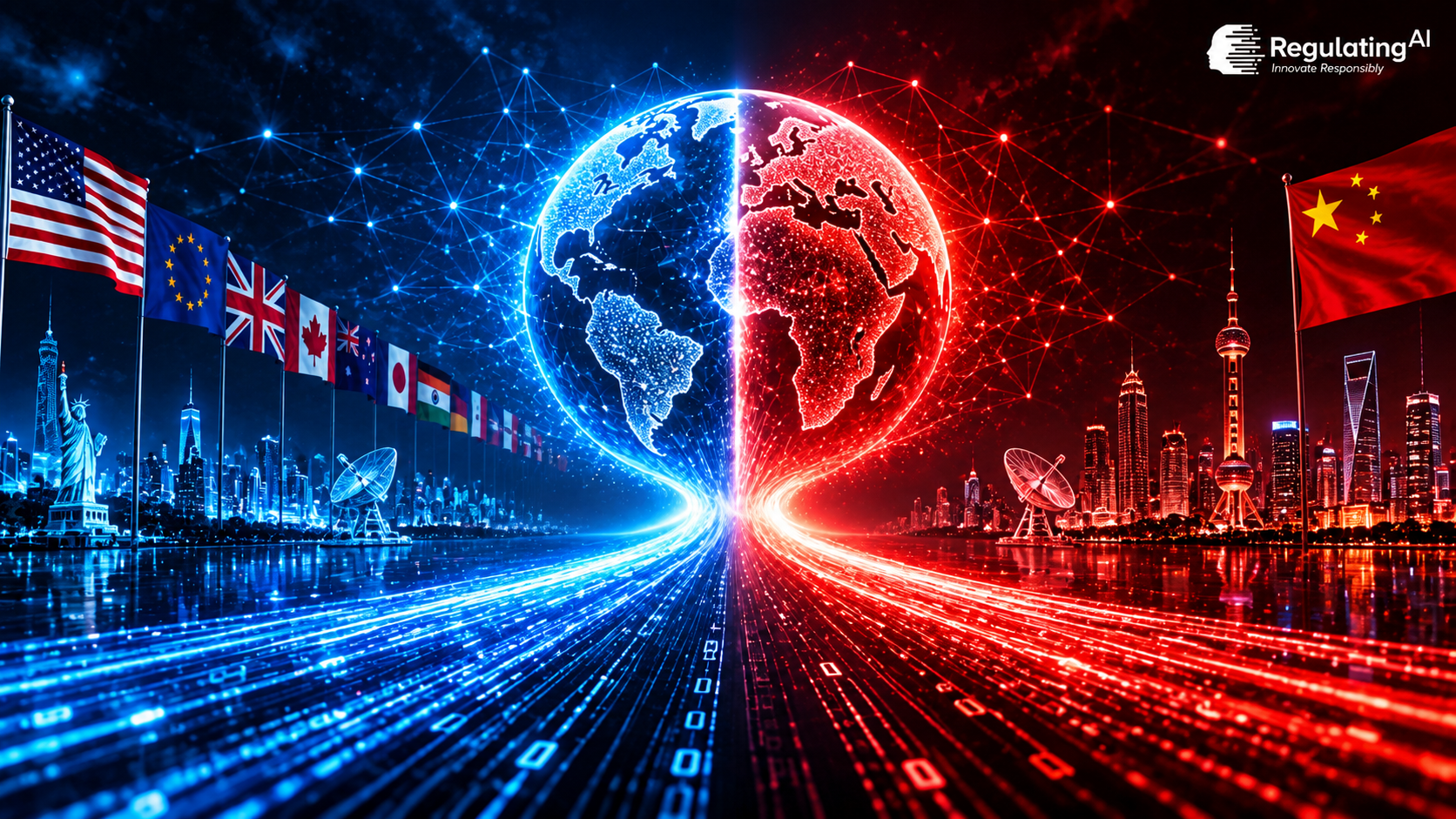
The global race for artificial intelligence leadership has reached an intense turning point. Washington is now demanding that foreign allies pick a definitive side. American officials drafted letters warning partner countries against joining competing Chinese initiatives. This diplomatic push rapidly reshapes tech policy in 2026 and international supply chain agreements. American diplomats sent draft notices directly to thirty-five international partners. These countries previously signed the American AI Opportunity Statement in June. The new directive warns that nations cannot support competing frameworks. Recent artificial intelligence regulation news highlights how quickly technology diplomacy is evolving today. Washington wants to secure vital semiconductor supply chains and critical minerals. A prominent artificial intelligence think tank observed that dual membership weakens Western alliances. American leaders want absolute loyalty to keep advanced technology out of rival hands. Nations must now decide where their strategic loyalties lie.
The Battle of Competing Frameworks
The United States created the Pax Silica framework to unite allied nations. Key partners like Japan, South Korea, and Australia joined immediately. Washington wants these member nations to practice responsible AI innovation across all industries. This alliance protects critical computing resources and secures next-generation algorithmic models. Meanwhile, Beijing promotes its own World Artificial Intelligence Cooperation Organization. China champions open-weight artificial intelligence models to attract developing economies. Many developing countries want to balance AI innovation and regulation without picking exclusive partners. However, Washington insists that nations cannot maintain equal ties with both superpowers.
Critical Minerals and National Security Pressure
- The United States views technology access as a core national security priority.
- Central Asian countries like Kazakhstan currently face intense diplomatic pressure from Washington.
- A leading AI regulatory advisory board noted that mineral-rich countries hold immense leverage.
- Both superpowers want exclusive access to raw materials that power cutting-edge supercomputers.
Why Washington Demands Exclusive Partnerships
American officials state clearly that partners cannot have it both ways. Nations must adhere to strict AI safety regulations to earn American technological trust. The State Department insists that technology sharing requires total ideological alignment. Joint investment opportunities remain strictly reserved for committed Western partners. Supercomputers and neural networks increasingly handle critical military applications and cyber operations. Experts demand clear AI compliance laws to prevent hostile military exploitation of code. Dual alignment risks leaking proprietary American software advances directly to rival nations. Washington wants closed ecosystems that protect domestic technological superiority.
Corporate Compliance and Trade Restrictions
- Industry leaders follow these geopolitical developments through an AI legislation tracker.
- Corporate executives must navigate complex export controls and cross-border trade restrictions.
- Tech companies face severe legal penalties if they violate international hardware embargos.
- The technological landscape now demands strict organizational compliance worldwide.
Establishing Global Standards
Western democracies want to build a secure, ethical AI ecosystem across borders. This coordinated approach aligns computing safety, patent rights, and privacy protections. American leaders argue that centralized standards prevent dangerous algorithmic surveillance tools. They urge international partners to accept these common operational rules immediately. Diplomats frequently discuss these strategic technology goals during AI policy dialogue sessions. Allied representatives debate export controls, open-source technology risks, and software verification rules. These conversations help create uniform digital trade rules for democratic societies. Washington hopes clear boundaries will prevent unauthorized technology transfers abroad.
Global AI Governance and Strategic Takeaways
International trade bodies are updating global AI regulations to address advanced computing. Sovereign governments must balance local economic growth with international diplomatic duties. A nation that chooses the wrong partner risks losing crucial hardware shipments. Technology decisions now define modern geopolitical standing.
Key takeaways for international leaders include:
- Partner countries must choose between American and Chinese digital frameworks.
- The United States restricts hardware access for non-aligned global partners.
- Alliances now govern raw materials, specialized semiconductors, and advanced models.
- Cross-border compliance demands immediate updates to internal corporate policies.
Strategic Impact on Allied Governments
Foreign capitals must assess their domestic technology needs very carefully. Many smaller countries previously tried to maintain trade ties with both superpowers. However, evolving government AI policy leaves little room for middle-ground diplomacy. Refusing the American framework could lock a nation out of top software ecosystems. International legal experts track new artificial intelligence laws to protect business contracts. Multi-national corporations must constantly audit their international supply chains and joint ventures. Companies cannot afford unexpected trade bans on advanced computer microchips. Business leaders must align their corporate roadmaps with changing foreign policy directives. Diplomats must balance economic trade, national defense, and domestic growth. Every modern country needs access to advanced digital tools to stay competitive. Setting an effective AI governance framework ensures smooth integration with Western computing platforms. Nations that act quickly will secure their economic future.
The Future of Global AI
Public sentiment also shapes international debates through active grassroots AI advocacy groups. Citizens demand transparency, democratic accountability, and ethical considerations from technology policymakers. Public interest groups monitor how foreign policy choices impact consumer privacy rights. Public debate ensures that technological alliances serve the broader public good. Global technology leaders will continue monitoring this fast-moving AI regulatory landscape. The choice between competing superpowers will shape world markets for decades. Governments must select reliable partners to maintain steady technological progress. Ultimately, exclusive strategic alliances will define the future of artificial intelligence.