
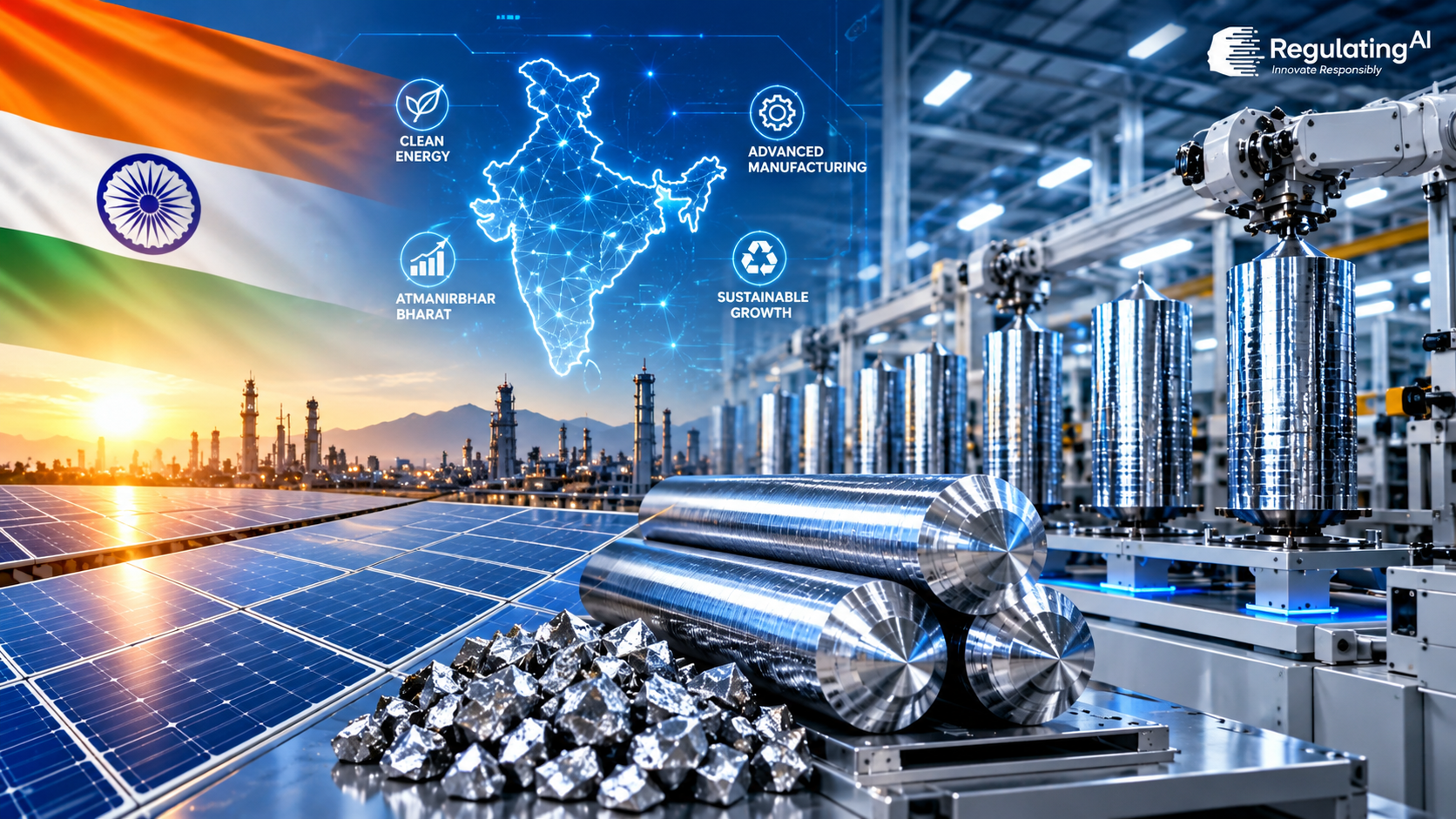
India plans a Production-Linked Incentive (PLI) scheme for domestic polysilicon production, targeting over 10 gigawatts of initial manufacturing capacity to reduce complete reliance on Chinese solar raw materials. Keeping an AI legislation tracker updated helps monitoring groups track critical infrastructure policies, especially as India aims for 500 gigawatts of non-fossil power capacity by 2030. Because polysilicon sits at the essential root of solar module production, building local upstream capacity directly protects long-term national energy security interests. Although India boasts over 200 gigawatts of solar module assembly capacity, creating an ethical AI ecosystem requires stable, self-reliant hardware manufacturing networks. To support this growth, the government targets 80 gigawatts of ingot and wafer capacity by 2028, proving that establishing an AI governance framework keeps technology infrastructure resilient against global disruptions.
Reducing Import Risks from External Markets
India currently imports all of its polysilicon directly from Chinese suppliers. Tracking artificial intelligence regulation news reveals similar decoupling efforts across global markets.
- Polysilicon manufacturing requires heavy initial capital and technical expertise.
- Foreign market dominant control creates continuous pricing and supply risks.
- Incentive programs empower local firms to invest in deep chemical processing.
Policy Drivers for Local Supply Security
The Ministry of New and Renewable Energy leads this strategic manufacturing push. Checking recent AI bill status updates highlights how governments safeguard critical supply assets. Polysilicon serves as a foundational material for advanced microchip manufacturing. Advocating for regulating artificial intelligence relies on secure, ethically sourced hardware components.
Global Industrial Policy and Tech Governance
Nations increasingly build localized supply chains for critical industrial tech components. Analyzing global AI regulations shows a shift toward domestic technological sovereignty.
- Subsidies encourage private investments across high-risk upstream manufacturing sectors.
- Integrated local supply chains lower production costs for final solar panels.
- Sustainable hardware manufacturing supports long-term national energy independence goals.
Aligning Industrial Policy and Tech Oversight
Green transitions require stable access to basic raw materials and compute hardware. Supporting artificial intelligence advocacy strengthens public policy surrounding strategic technology assets. State incentives attract major private investments into complex domestic chemical processing. Shaping artificial intelligence public policy helps balance market expansion with national safety.
Establishing Regulatory Frameworks for Supply Chains
Domestic production shields local solar developers from foreign trade embargoes or tariffs. Enforcing AI compliance laws ensures that manufacturing plants uphold environmental safety standards. Governments must pair financial incentives with clear operational and safety guidelines. Following ethical AI guidelines keeps hardware supply chains transparent and accountable.
- PLI schemes build local industrial competitiveness across essential global markets.
- Upstream manufacturing protects renewable energy developers from unpredictable market shocks.
- Strategic subsidies accelerate heavy industrial technological expansion across developing economies.
Policy changes in green energy mirror broader shifts in global technology governance. Reading AI regulatory news helps leaders navigate evolving trade and supply compliance rules.
The Future of Tech Policy and Hardware Independence
Nations must enforce strict oversight over critical technological and industrial manufacturing assets. Comprehensive AI safety regulations protect energy systems from potential foreign supply threats. Clear government policies encourage long-term private capital investments into foundational industries. Updating government AI policy protects critical energy infrastructure against foreign supply shocks. Resilient supply chains form the backbone of modern technological and economic security. Aligning AI laws and ethics guarantees fair labor practices across new processing facilities.
Community-Led Governance and Public Engagement
Tracking energy legislation helps civil society monitor industrial environmental impacts. Utilizing tech legislation tracking tools keeps local communities informed about national policy shifts.
Fostering Active Research Networks
Dedicated AI researchers analyze how hardware bottlenecks impact wider technology adoption schedules. Independent audits keep government subsidy programs efficient, transparent, and fair.
- Civil society groups monitor government incentive spending across major manufacturing sectors.
- Open discussions allow local communities to voice concerns regarding chemical plants.
- Research networks publish data detailing domestic clean energy supply chain progress.
Collaborating with the regulating AI community ensures policy frameworks serve broad public interests. Transparent public oversight builds long-term civic trust in major industrial initiatives.
Strategic Policy Insights for Modern Hardware Supply
Grassroots action drives accountability across multi-billion-dollar government incentive programs. Engaging in grassroots AI advocacy ensures local communities benefit from clean energy investments.
- Public feedback shapes environmental guidelines for new heavy industrial manufacturing sites.
- Active civic involvement ensures fair regional distribution of green technology jobs.
- Community oversight prevents unchecked corporate exploitation of local natural resource bases.
Enforcing Responsible Systemic Innovation
Policymakers must balance rapid technological growth with strict environmental protection standards. Modern AI regulation frameworks address physical hardware supply risks alongside software threats. Drafting clear policies helps domestic firms navigate increasingly complex global trade standards. Updating AI policy guarantees smooth integration with international clean energy trade networks.
Future-Proofing Supply Infrastructure
Sustainable manufacturing policies ensure long-term energy access without compromising environmental health. Supporting responsible AI innovation requires resilient, green, and ethically sourced hardware ecosystems.
Adapting to Modern Tech Governance Standards
Global economic trends favor nations with secure, end-to-end industrial technology production. Evaluating tech policy 2026 trends highlights a widespread global push toward domestic manufacturing self-reliance. Global supply chains increasingly favor localized, secure, and transparent production routes. Strategic energy policies protect national security while advancing global climate targets. Industrial self-reliance fosters long-term economic growth and domestic technological innovation. Listening to an AI policy podcast provides deep insights into international supply chain policies. Experts break down complex industrial incentive programs into clear, actionable public insights.
Driving Global Compliance and Strategic Growth
Companies operating in green tech must comply with expanding international trade rules. Maintaining AI regulatory compliance protects firms from sudden trade penalties or supply disruptions.
- Cross-border compliance frameworks ensure ethical sourcing across global hardware supply chains.
- Localized polysilicon manufacturing positions India as a major global green tech exporter.
- Regulatory compliance builds investor confidence in large-scale domestic industrial projects.
Engaging Industry Experts
Consulting with AI governance experts helps domestic firms design compliant, scalable manufacturing operations. Expert guidance minimizes regulatory friction during rapid industrial expansion phases. Understanding the AI regulatory landscape allows business leaders to anticipate supply chain shifts accurately. Proactive adaptation protects enterprise investments from unexpected international policy updates. Participating in AI policy dialogue connects industrial leaders, regulators, and community advocates effectively. Continuous collaboration ensures national manufacturing incentives deliver maximum economic and social value.